UChicagoTech - Center for Technology Development & Ventures

UChicagoTech | Center for Technology Development & Ventures

Home > Learn More > Features

Fresh water scarcity and cost-effective desalination

The scarcity of fresh water is an increasingly serious problem around the world due to growing populations and diminishing supplies of fresh water. Desalination could help alleviate these shortages, but it has traditionally been an extremely expensive process.

The demand for water is so great that the worldwide desalination market is expected to reach an astonishing $87.8 billion by 2016, even though only about 1 percent of the world’s drinking water is produced by desalination. There is a huge need for technologies that could reduce this cost.

To help meet this need, the Innovation Fund, the University of Chicago’s venture philanthropic proof-of-concept fund, awarded Heinrich Jaeger, the William J. Friedman and Alicia Townsend Professor of Physics at the University of Chicago, $65,000 in its third round of funding at the end of 2011 to establish the commercial feasibility of a nanoparticle desalination system that Jaeger invented.

“In order for desalination to become a real solution to the growing water scarcity problem, new technologies will be required to reduce the major cost components of the process,” says Sean Sheridan, an assistant director at UChicagoTech, which administers the Innovation Fund. “Professor Jaeger’s nanofiltration technology represents a promising step towards achieving this goal.”

The high cost of traditional desalination is driven by the price of energy for high-pressure systems and the capital cost of high-pressure pumps and seals. Today, recovery of capital and electric power add up to as much as 73% of the cost of desalinated water.

“Our system has the potential to cut these costs by using an ultrathin self-assembled nanoparticle membrane,” Jaeger says. “Due to its extreme thinness and excellent permeability characteristics, this nanofiltration membrane can be used for a wide range of nanofiltration processes at low pressures, including desalination.”

The nanofiltration membrane was developed by Jaeger and Xiao-Min Lin, scientist at Argonne’s Center for Nanoscale Materials, together with University of Chicago postdocs Jinbo He, Edward Barry and Sean McBride. At about 30 nanometers, it is the world’s thinnest and has unique features that may turn out to make the crucial difference with this technology. The size, shape and chemical structure of the membrane’s pores can be systematically tuned to optimize its filtration properties. As a result, it allows 100 times more flow at the same pressure. In addition, the self-assembly process used to fabricate it reduces costs.

UChicagoTech's role

Jaeger has a close working relationship with UChicagoTech, which is committed to supporting University faculty as they work to translate bench science to commercial applications. He regularly updates the office on his new ideas and research results. After he approached UChicagoTech with his initial data about the nanofiltration system, UChicagoTech helped him to develop a business proposal and present the opportunity to the Innovation Fund. UChicagoTech also filed an international patent application at the end of 2012 to protect the technology.

“The Innovation Fund award has been extremely helpful by giving us not only financial support to further develop this technology in a timely manner but also by connecting us with a highly supportive group of industry experts and entrepreneurs,” Jaeger says.

The award is helping to optimize the low-pressure ion rejection/permeation characteristics for the product; develop and test a system that is environmentally friendly, compatible with drinking water standards, and scalable for the production of large volumes of water; and design an assembly process that is compatible with existing commercial filtration systems.

Initially, Jaeger intends to target small, distributed or mobile water treatment systems. After being proven on a small scale, the technology could attract additional funding and be developed for larger systems.

“The potential of this technology to establish a new class of nanofiltration devices is an exciting prospect,” Jaeger says. “Many purification processes in a wide range of industries depend on nanofiltration and could benefit greatly from highly specialized and tunable parameters in a low-pressure technology. UChicagoTech’s help has been indispensible.”

By Greg Borzo

Photos

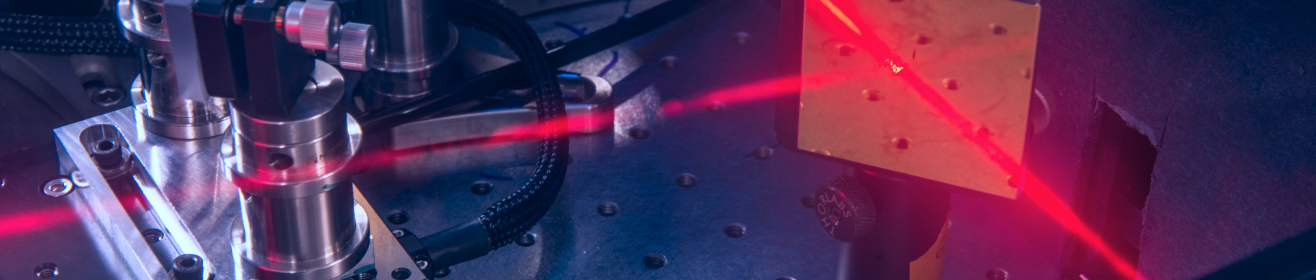
A grant from the University of Chicago’s Innovation Fund will help Heinrich Jaeger, PhD, establish the commercial feasibility of a nanoparticle desalination system.

A grant from the University of Chicago’s Innovation Fund will help Heinrich Jaeger, PhD, establish the commercial feasibility of a nanoparticle desalination system.

Photo by Lloyd DeGrane

Current Features RSS

UChicago and industry come together at the 2013 BIO International Convention

UChicago and industry come together at the 2013 BIO International Convention

The convention highlighted the important role academia plays in the advancement of the biotechnology field, and the University of Chicago was highly visible throughout the event.
Read full story »

New UChicagoTech Deputy Director Seeks New Challenges

New UChicagoTech deputy director seeks new challenges

Prior to joining UChicagoTech as its new deputy director, Steve Kuemmerle had a long career on both the technology and the business side of Abbott Laboratories.
Read full story »

Fresh water scarcity and cost-effective desalination

Fresh water scarcity and cost-effective desalination

A grant from the University of Chicago’s Innovation Fund will help Heinrich Jaeger, PhD, establish the commercial feasibility of a nanoparticle desalination system.
Read full story »

Patent Law is Changing – What UChicago Needs to Know

Patent law is changing:
What UChicago needs to know

The final provisions of the Leahy-Smith America Invents Act (AIA) will go into effect on March 16, 2013, enacting what is considered to be the most significant change to the United States patent system since 1952.
Read full story »


Feature Stories »